Many Singaporeans have been to Japan several times. It is clean, easy and delicious, and as a first trip abroad it is hard to go wrong. So when it is time to plan the next holiday, the question comes up: Japan again, or is it time to see China?
We have specialised in China for more than 30 years, so we are a little biased. But in this article we will be honest about where Japan does better and where China is worth more.
The real question isn’t which country is better. It’s what you want from this trip.
1. Getting there: flight time, time zone and visa
Flight time. About 7 hours to Tokyo and 6.5 hours to Osaka. Kunming, Guangzhou, Xiamen and Chengdu are about 4 hours away, and Beijing and Shanghai 5 to 6 hours.
Time zone. Japan is one hour ahead of Singapore. China is in the same time zone, so you don’t even change your watch.
Visa. Singapore passport holders can visit Japan visa-free for up to 90 days, and China visa-free for up to 30 days at present. Both are easy.
2. Cost: which is better value?
A weak yen has made Japan feel cheap in recent years, but 2026 has brought some new costs:
the departure tax rose from ¥1,000 to ¥3,000 on 1 July 2026
Kyoto’s hotel tax went up in tiers from March 2026, to as much as ¥10,000 per person per night at the top end
from November 2026, shoppers pay consumption tax at the till and claim it back when they leave, instead of buying tax-free in the shop
with record visitor numbers, popular hotels book out early in peak season
In China, meals, transport and entrance tickets usually cost less than in Japan, and a high-speed train ticket is often a fraction of the price of a Shinkansen over a similar distance. But China is big, so you will often need domestic flights or trains between cities, and those add up. On a tour they are already in the fare, so you know the total before you go.
3. Size and scenery
Japan covers about 378,000 square kilometres. China covers about 9.6 million, roughly 25 times as much.
Japan’s beauty is in the detail: temples, hot springs and gardens, several of them in a single day. China’s is in the variety:
ice sculptures in Harbin, where winter nights drop below minus 20°C
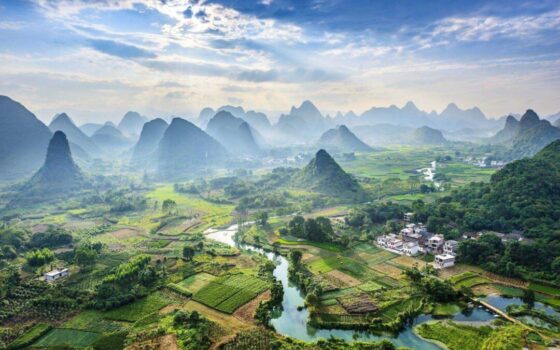
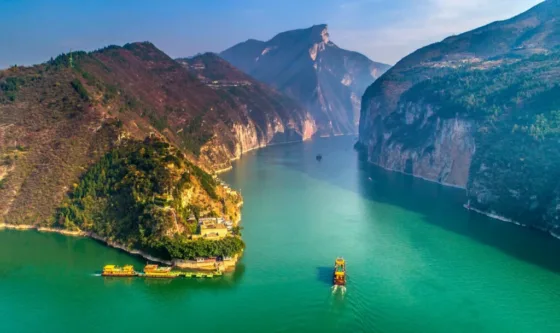
Harbin Ice and Snow WorldKanas in autumn, XinjiangThe Li River, GuilinDaocheng YadingThe Terracotta Warriors, Xi’anThe Three Gorges of the Yangtze
Where Japan wins: it is compact and the transport is dense, so even four or five days feel full.
4. Food
Everyone knows Japan’s sushi, ramen and wagyu.
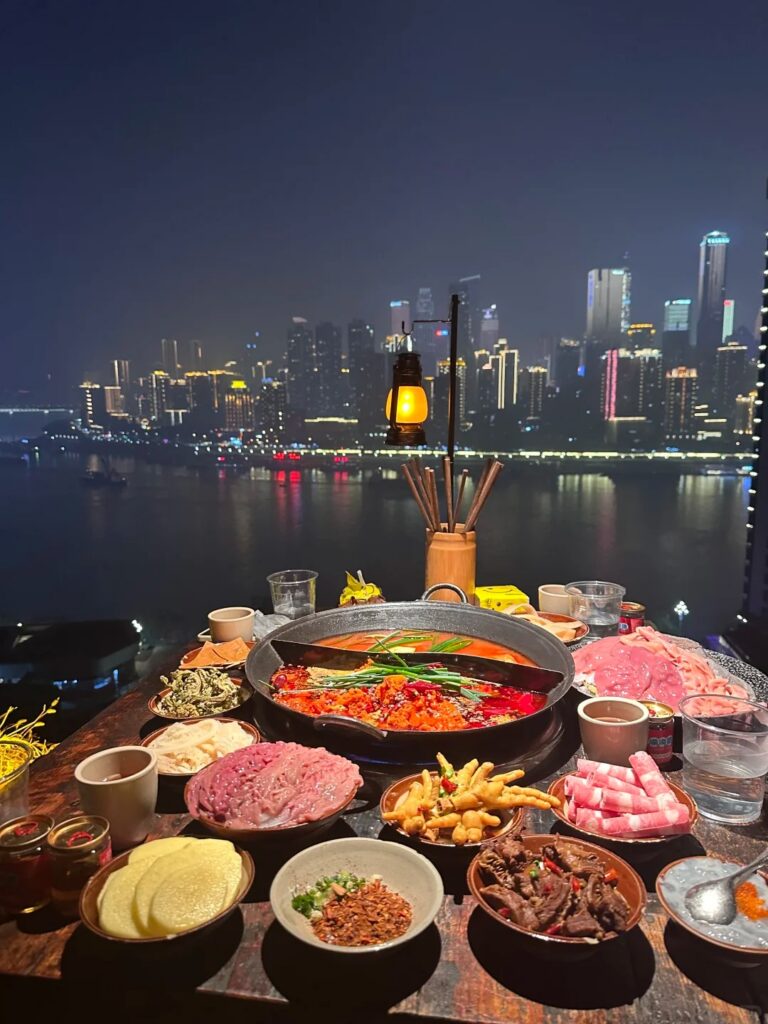
“Chinese food” is really many cuisines: Sichuan, Hunan, Cantonese and Teochew, lamb skewers in Xinjiang, wild mushrooms in Yunnan, slow-cooked stews in the Northeast. The flavours change from one province to the next.
Hotpot by the river, ChongqingDim sum in Guangzhou
Many dishes Singaporeans grew up with have their roots in China. Hainanese chicken rice traces back to Wenchang chicken in Hainan, and one bite of braised goose in Chaoshan tells you where Singapore’s Teochew braised duck comes from.
5. Language and convenience
Mandarin makes China easy. You can read menus and signs, chat with locals and bargain. In Japan, some kanji make sense, but conversation is hard.
Japan wins on “everything just works”. Google Maps and WhatsApp work as normal, and cards and transport cards are easy to use.
In China, you pay with Alipay or WeChat Pay, and both accept foreign credit cards. Google and WhatsApp don’t work on local Wi-Fi, but Singapore mobile data on roaming still does.
Shop signs in Shantou’s old town
6. Crowds and seasons
Japan has had record visitor numbers, and Kyoto and the area around Mount Fuji are often packed.
In China, the crowds are mostly local holidaymakers during the long breaks: Chinese New Year, May Day (1 to 5 May) and National Day (1 to 7 October). Avoid those weeks and many places are far quieter.
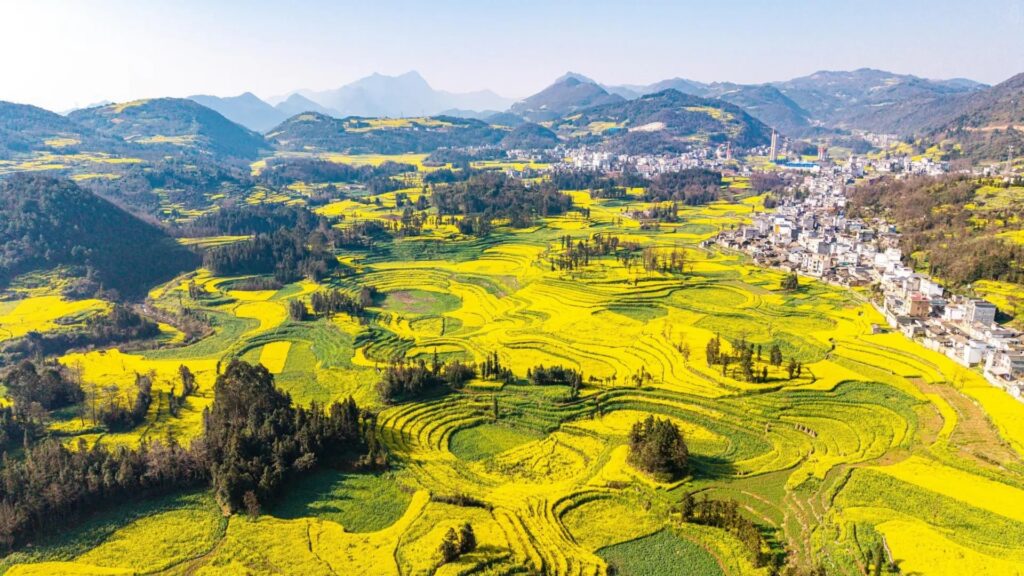
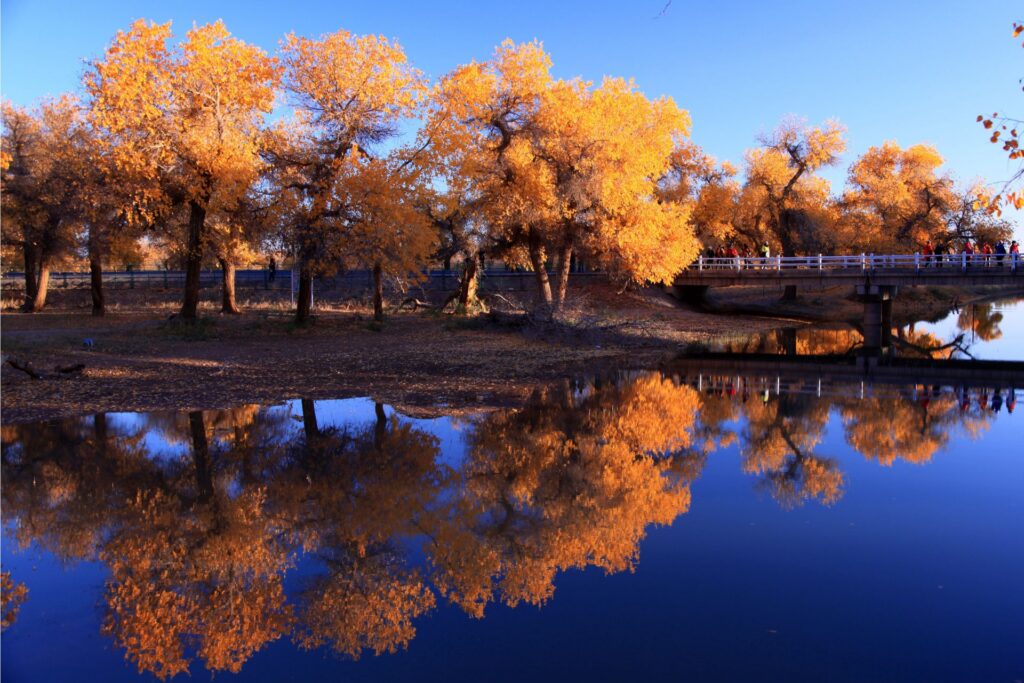
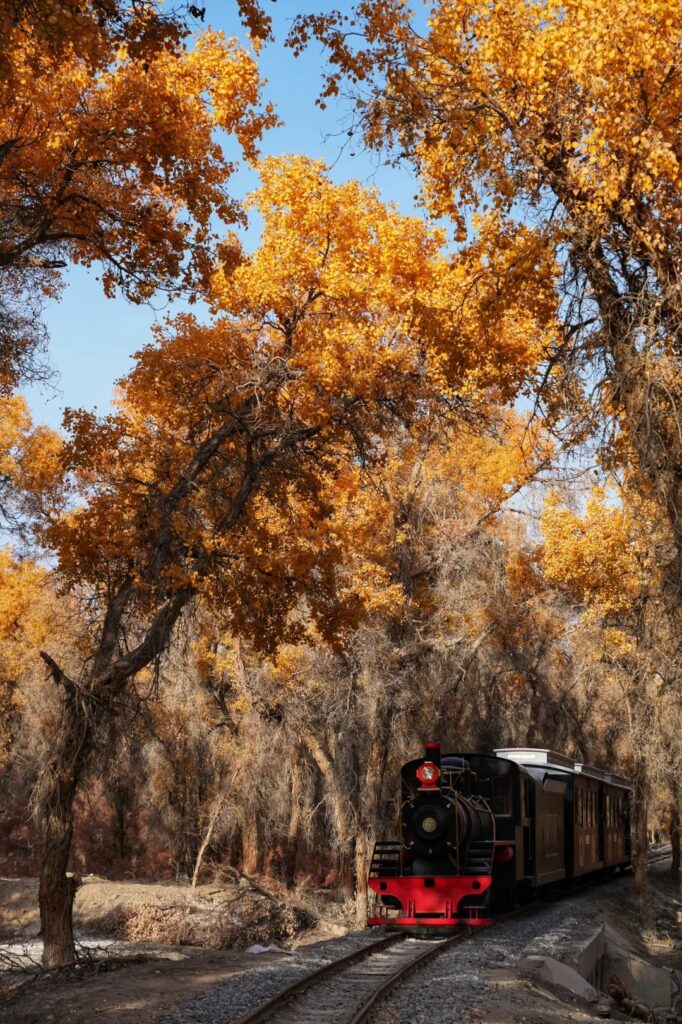
Seasons. Both countries have cherry blossoms and autumn leaves. China adds the Harbin ice festival in January, rapeseed flowers at Luoping in February and March, lavender in Ili in June and July, golden poplars in October and ginkgo in Yunnan in November.
Harbin ice sculptures in JanuaryRapeseed flowers at LuopingGolden poplars in October, Luntai
7. What Japan can’t give you: your roots
Many Chinese Singaporeans’ grandparents and great-grandparents came from Fujian, Guangdong and Hainan. Walking through the town your family once left is a trip Japan can’t offer.
Chikan old town, Kaiping, GuangdongChengqi Lou earthen roundhouse, Fujian
So, which one?
Choose Japan if you:
have four or five days and want an easy city break
are travelling with children who want theme parks
mainly want shopping and hot springs
don’t speak Mandarin and want English and Google Maps all the way
Choose China if you:
have been to Japan a few times and want something different
want snow peaks, deserts and grasslands, landscapes Japan doesn’t have
speak Mandarin and want to talk with the people you meet
want to see where your family came from
want your meals, transport and tickets to cost less on the ground
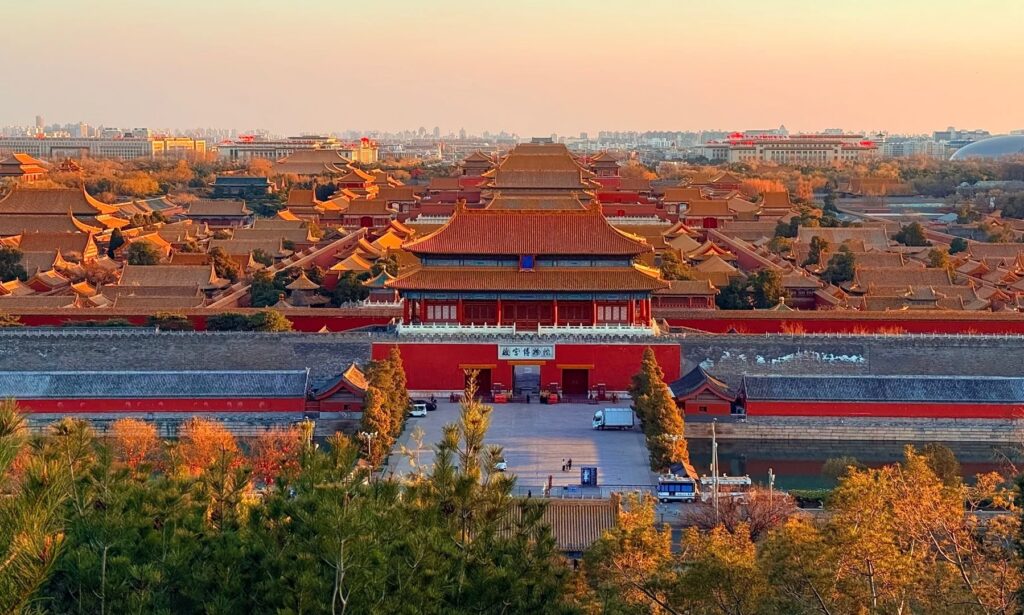
The Forbidden City, Beijing
You don’t have to choose just one. Japan this year and China next is a fine plan too.
Making China as easy as Japan
Japan feels easy because the signs make sense, the transport runs smoothly and everything is well organised. In China, a travel agency that knows the country takes care of all of that for you.
China, and only China, since 1994. We have specialised in China for more than 30 years.
Licensed by the Singapore Tourism Board (licence TA00932).
Someone looking out for you. Groups of 20 or more travel with a tour leader, and local guides speak Mandarin, with English-speaking guides on request.
Everything in writing. What the fare includes and excludes is on your itinerary before you pay.
An office in Singapore. Call us, WhatsApp us, or walk in from Monday to Saturday.
Want to know where in China is best this season? Call 6534 5228 or WhatsApp 8318 0934.
If your heart is set on China, leave the rest to us.
Many people planning their first trip to Xinjiang look at a map and think a week should be enough. Then they start working out the route and realise just how big it is.
How big is Xinjiang?
Xinjiang covers about 1.66 million square kilometres. That is roughly a sixth of China’s land area, which makes it the country’s largest province-level region. To put that in perspective, it is about the size of:
more than 2,200 Singapores
five Malaysias
three Frances
It borders eight countries: Mongolia, Russia, Kazakhstan, Kyrgyzstan, Tajikistan, Afghanistan, Pakistan and India. The geographic centre of the Asian continent is just outside Urumqi.
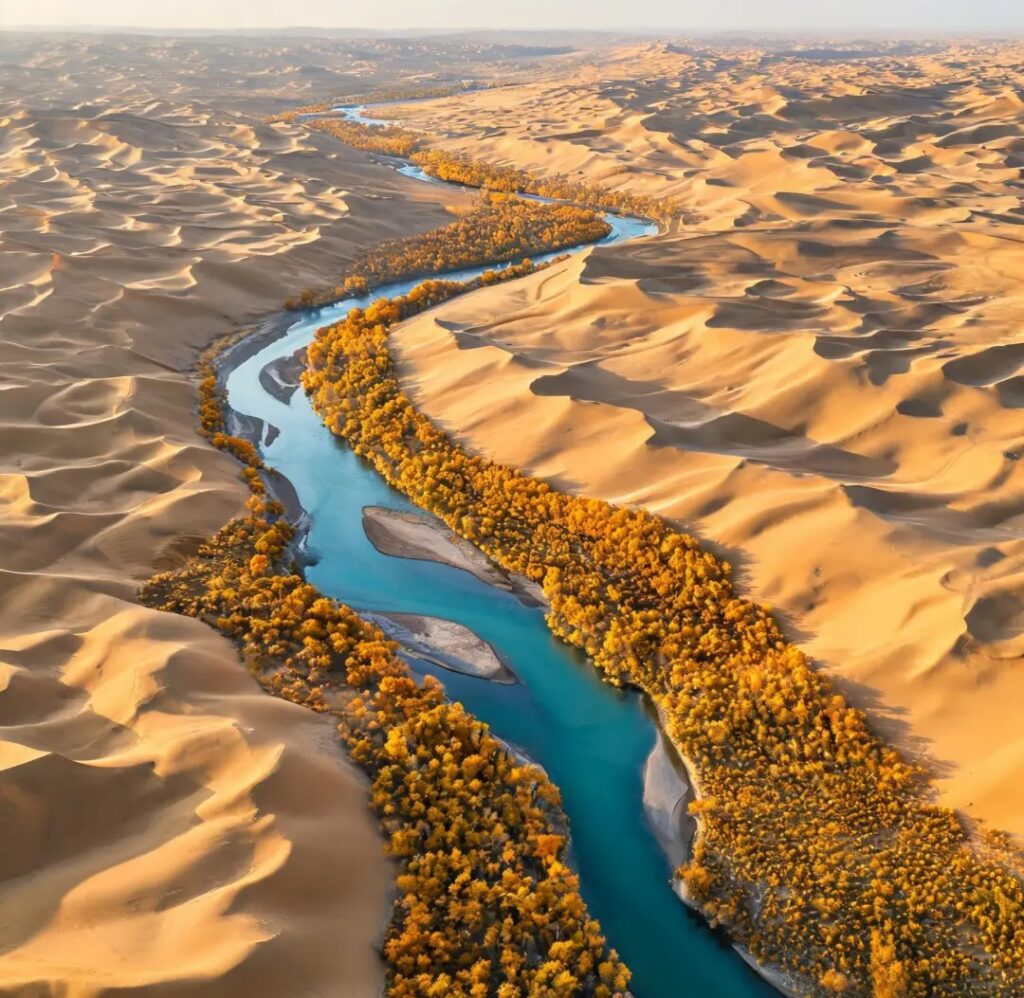
The Tianshan mountains run across the middle, dividing the north from the south. In the south lies the Taklamakan, China’s largest desert. Less than a tenth of the land is suitable for living on, so towns sit in oases at the foot of the mountains and the edge of the desert, often a long way apart.
The Taklamakan, China’s largest desert
One more surprise: Xinjiang runs on Beijing time even though it lies far to the west, so in summer the sun often doesn’t set until around 10pm.
Eight hours on the road is a normal day
Driving from Urumqi to Kashgar is about 1,470 km, or 17 to 18 hours without stopping. That’s roughly the same as driving from Singapore to Penang and back.
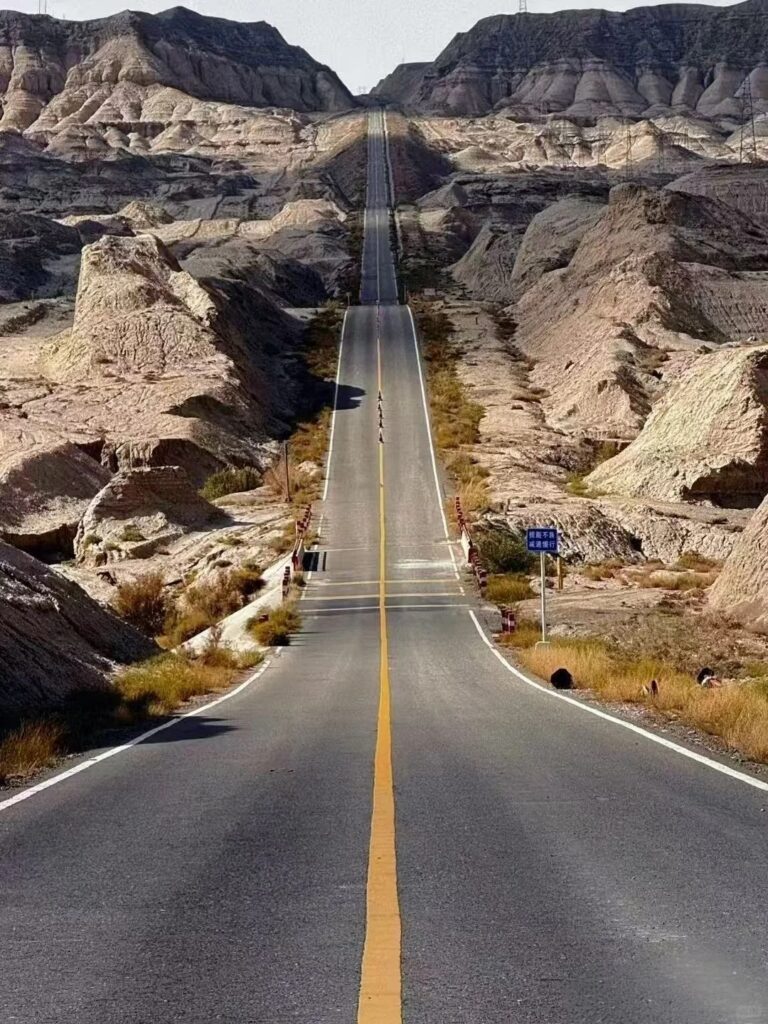
The Taklamakan Desert Highway
Even a loop of southern Xinjiang means five to eight hours on the coach on many days. On our own Southern Xinjiang tour, Hotan to Kashgar is about 500 km and takes around eight hours, and Kashgar to Aksu is about 520 km and seven hours. Much of the way is gobi and desert, and the next rest stop, and the next toilet, can be a long way off.
So in Xinjiang, the question isn’t only where to go. It’s how you get from one place to the next.
What makes Xinjiang special
The north: lakes, grasslands and autumn colour
Kanas Lake and Hemu village. In September the hillsides turn gold, and the log cabins of the Tuva people sit along the river valley. For many people, this is the Xinjiang they picture.
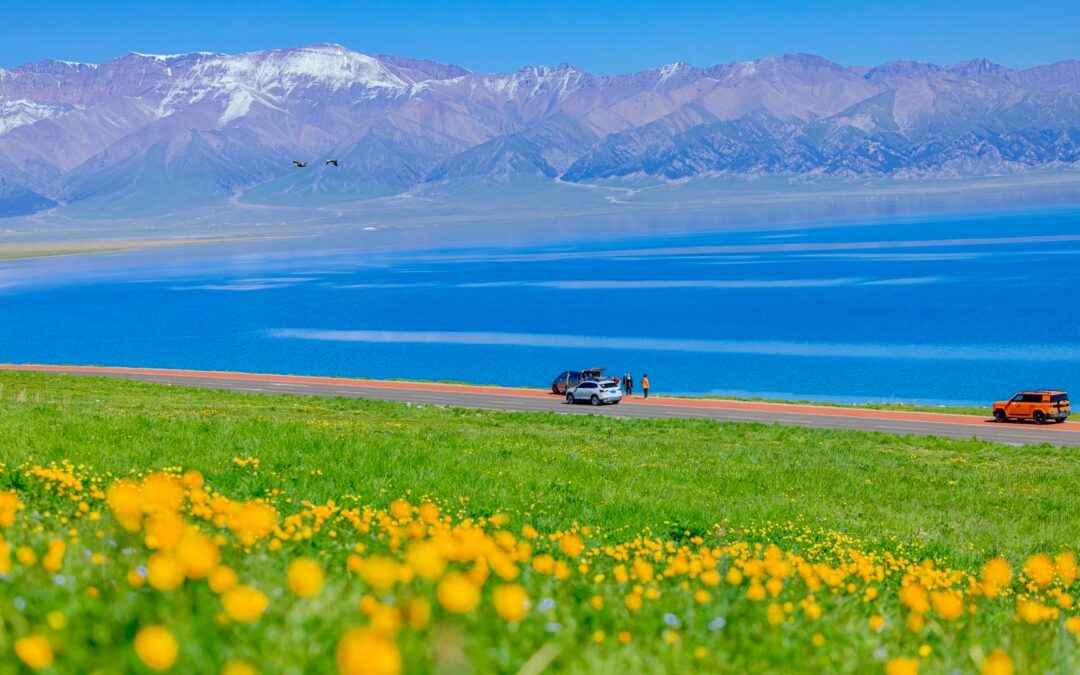
Sayram Lake. Known as “the last tear of the Atlantic”, its water is an almost unreal blue against the snow peaks.
Ili. Lavender fields in June and July, and the open grasslands of Nalati.
Tianchi, the Heavenly Lake. Ringed by spruce forest, with Bogda Peak reflected in the water.
Kanas in autumnHemu villageNalati grassland, IliTianchi in autumn
The south: old cities, high plateaus and desert
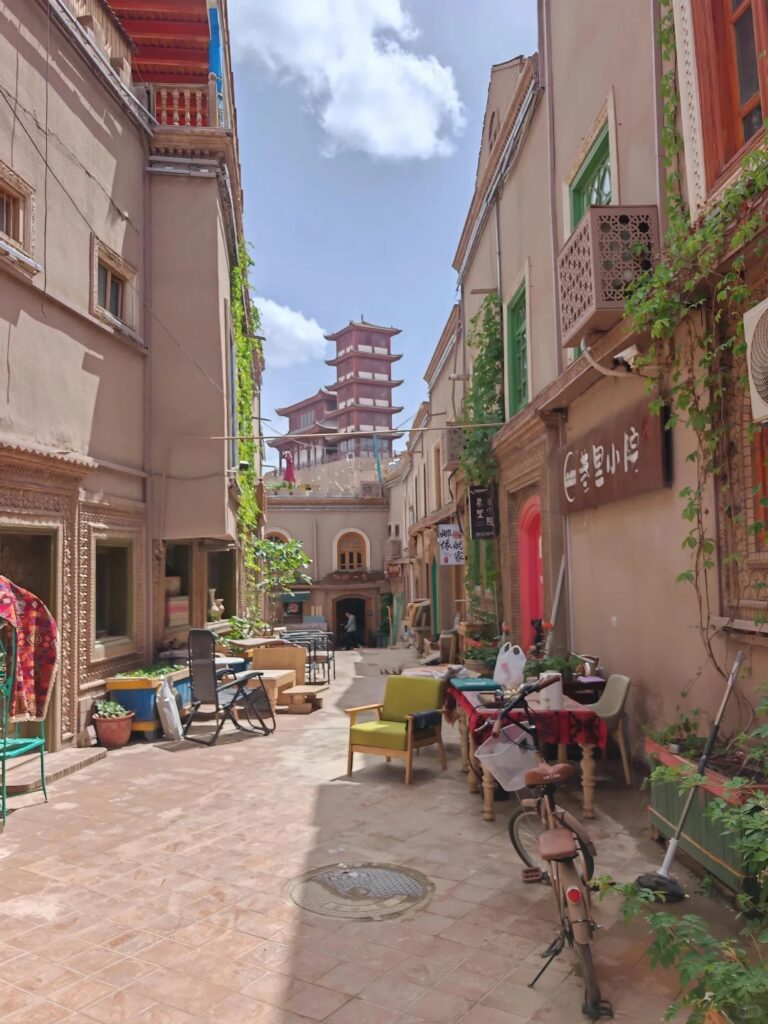
Kashgar Old City. A Silk Road trading town for more than 2,000 years, full of craft workshops, naan ovens and busy bazaars.
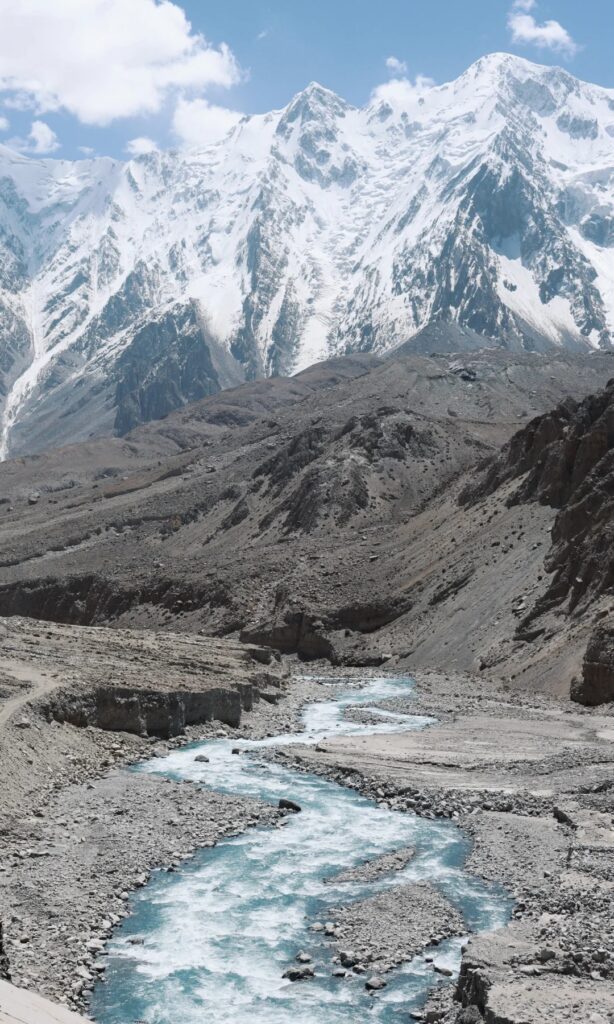
The Pamir Plateau. The Karakoram Highway climbs to Karakul Lake at about 3,600 metres, with Muztagh Ata right in front of you. Tashkurgan, further on, is home to the Tajik people.
Golden poplar forests. In October, the poplar forests at Luntai and Shaya turn bright gold. Locals say these trees live for a thousand years, stand for a thousand years after they die, and take another thousand to decay.
The Desert Highway. A road straight across the Taklamakan, with dunes on both sides as far as you can see.
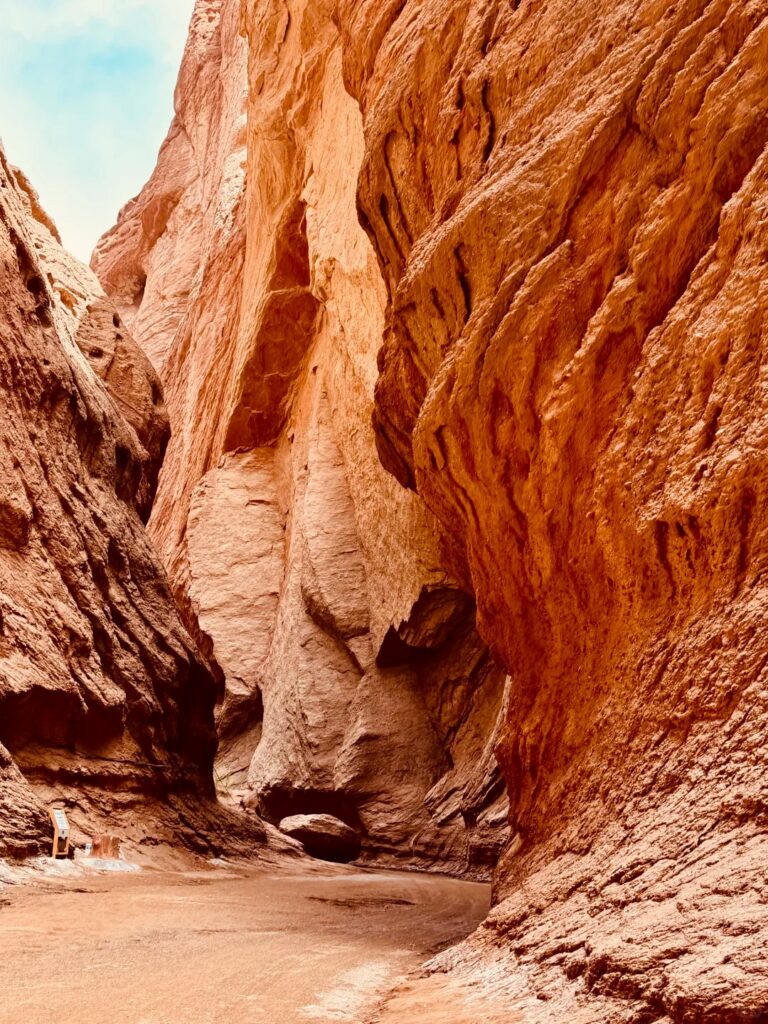
Kuqa. The red cliffs of the Tianshan Grand Canyon, and the ruins of Subashi, a Buddhist temple city more than a thousand years old.
Kashgar Old CityThe Pamir PlateauTianshan Grand Canyon, KuqaGolden poplars at LuntaiA park train in the Luntai poplar forest
The east: Turpan
The Flaming Mountains, the ruined city of Jiaohe, and grapes and raisins that live up to their reputation.
The Flaming Mountains, Turpan
Fruit and food
Long sunny days and cold nights make Xinjiang’s fruit famously sweet: Hami melons, Turpan grapes, Korla fragrant pears, Atush figs and Hotan pomegranates. Then there are lamb skewers, naan, polo rice and big plate chicken, all served in generous portions.
Many cultures
Xinjiang is home to many ethnic groups, including Uyghur, Kazakh, Hui, Kyrgyz, Tajik and Mongolian. Music, dress and food change from one region to the next, so every part of the trip feels different.
The International Grand Bazaar, Urumqi
Why the train is the best way to see Xinjiang
Xinjiang is so big that if you want to see a lot of it without spending every day on a coach, a tourist train is the best way to go.
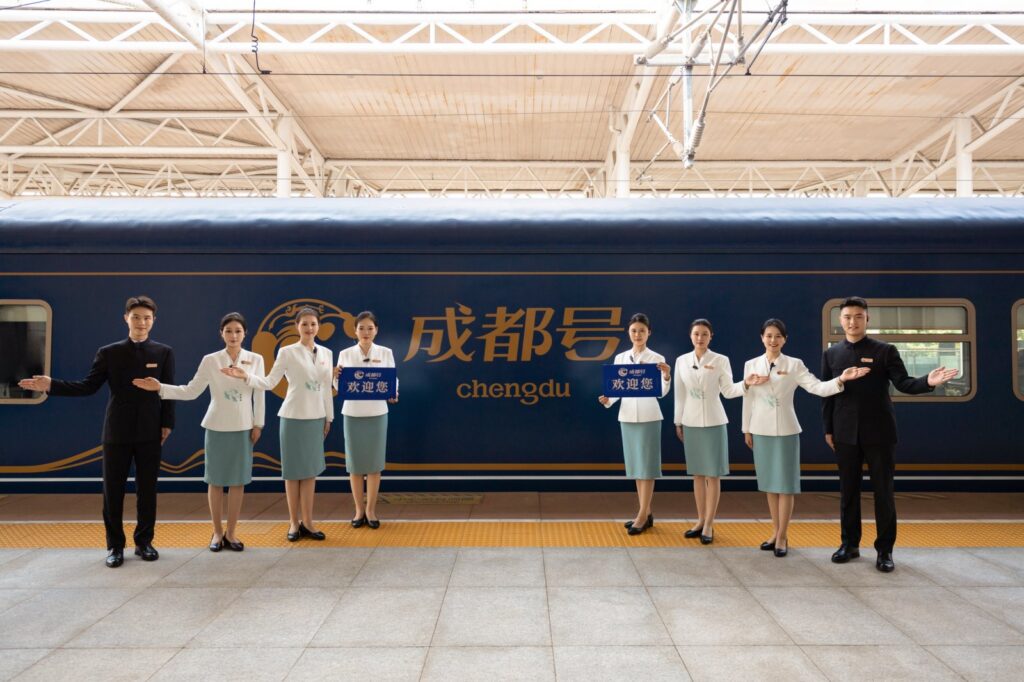
The Chengdu Hao Panda Train and its crew
1. The long stretches happen overnight
The train covers the longest distances while you sleep. You wake up at the next stop with the whole day free for sightseeing. On the Golden Panda Express, 8 of the 16 nights are spent on board.
2. Every cabin has its own bathroom
On a coach, the next toilet can be hours away. On each of our Xinjiang trains, every cabin has a private bathroom.
A twin cabin on the Chengdu HaoEvery cabin has its own bathroom
3. No packing up every morning
On train nights, your luggage stays in your cabin. There are no daily check-outs and no carrying bags on and off a coach.
4. The view is part of the journey
The dining and observation cars have big windows, and the gobi, snow peaks and oases roll past. When you’re tired, go back to your cabin. When you’ve been sitting too long, take a walk through the train.
The lounge car, with big windows
5. Easier for older travellers
You can get up and move around, eat proper meals in the dining car, and save your energy for the sights.
6. North and south in one trip
The trains link Urumqi, Altay, Ili, Kuqa and Kashgar, so in 17 to 19 days you can see both northern and southern Xinjiang.
To be honest: the train can’t go everywhere. Kanas and Hemu have no railway, so Altay to Hemu is about six hours by coach. The train takes the longest stretches, and the coach covers the last part.
Good to know before you go
When to go. Northern Xinjiang is best from May to September, with autumn colour in September. The south is at its best in October for the golden poplars. Our Xinjiang train tours depart between May and September.
Big temperature swings. Mornings and evenings are cold and middays can be hot, so dress in layers and bring a jacket. The sun is strong, so pack sun protection.
Drink plenty of water. The air is very dry.
Altitude. Karakul Lake on the Pamir Plateau is about 3,600 metres, and Tashkurgan is above 3,000 metres. On our Pamir routes, guests aged 70 and above need a recent medical report, and guests aged 75 and above must travel with a family member.
The Duku Highway. It is currently open only to holders of mainland Chinese identity documents, so our tours do not use it.














Recent Comments